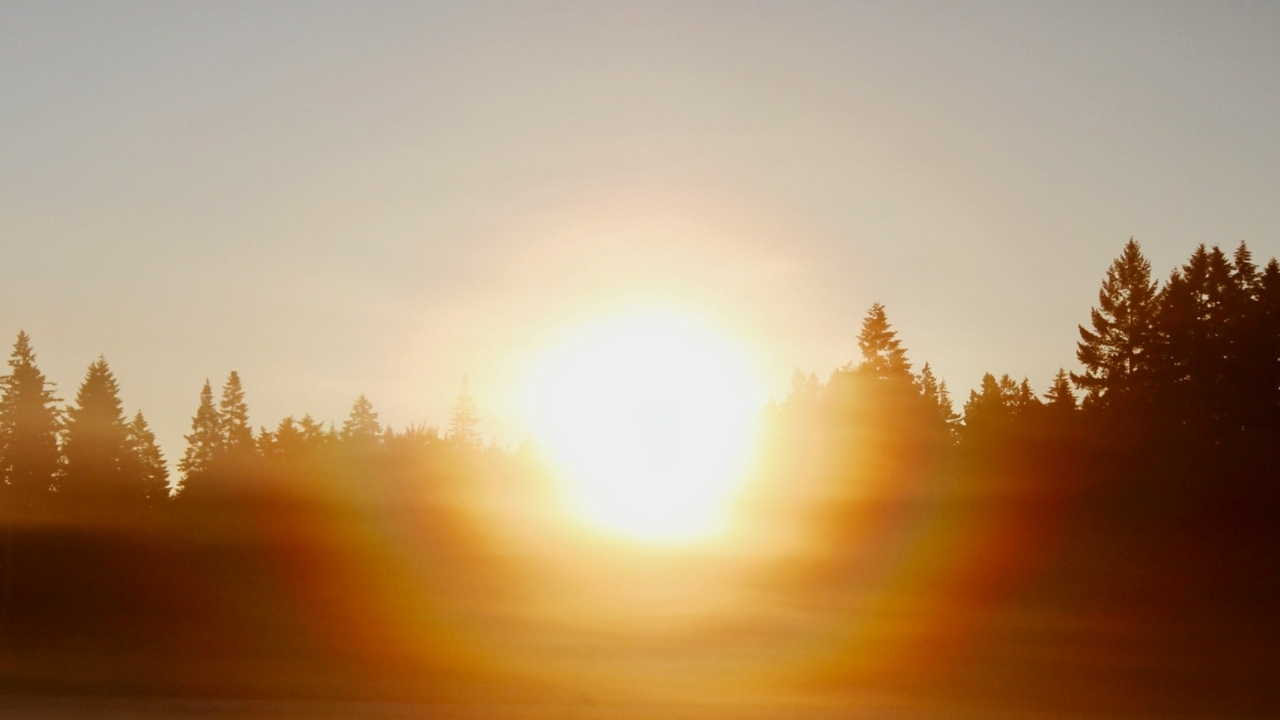
I don’t remember who mentioned the heat dome first. Maybe it was my husband, Tom, drinking iced coffee at 6:00 a.m. and scanning his phone for the weather forecast on a summer day in 2021.
A few years after that scorching summer, when I began leading climate grief workshops for farmers, I discovered that the phrase heat dome still lurks in our collective memory as a harbinger of climate apocalypse. It marks a reckoning, when climate change manifested in relentless heat cycles that killed our plants and dreams. When I mention the heat dome in my workshops in Oregon, heads nod in recognition. Likewise, at a workshop in New York this past February, polar vortex elicited groans from the audience. Atmospheric river speaks to farmers in Northern Washington, where floods upended greenhouses and washed away established fields.
Climate change forces us to create new language, and we often appropriate what was once benign to describe the stuff of nightmares. For example, in the past, atmospheric river might have brought to mind Styx—that mythical waterway running in deep caverns, emanating fog and loneliness. Atmosphere is a mash-up of two Greek words, atmos, meaning vapor, and spharia, meaning sphere. Once it came to mean the gaseous envelope around Earth, writers quickly recognized its metaphorical potential. The literal meaning—a medium that affects everything within it—made it a natural metaphor for emotional tone. By the late 1700s, novelists were using atmosphere to describe the emotional environment of a setting.
Atmospheric rivers, I have come to learn, are long, narrow corridors of concentrated water vapor. They often cause dangerous flooding.
Other terms are more honest, evoking violence and chaos. Bomb cyclone, for example, describes an explosive intensification of a storm. While not a new phenomenon, it has become a mainstay on weather channels in recent years. Measurements are specific and scientific: a storm is deemed a bomb cyclone when the pressure drops at least 24 millibars in 24 hours—a process called bombogenesis.
Likewise, arctic blasts are not new, but polar vortex disruptions are caused by climate change. As temperature differences between the Arctic and the rest of the world narrow, the jet stream has begun to waver. Imagine the polar vortex as a spinning top: when it spins fast, the climate remains stable and centered. As it slows with the warming Arctic, the top wobbles like a dizzy child, and pieces of cold air break off. The wobbling sends arctic blasts southward, where they can get stuck for weeks.
In 2011, the New York Times published an article on the emergence of a new meteorologic term: heat dome, a stagnant high-pressure system that traps heat. Unable to escape, frantic atoms and molecules zoom around, creating heat that begets more heat.
The word dome dates to ancient Greece, where dōma meant a housetop or roof. In medieval times, the Italian word duomo referred to a cathedral—literally “God’s house.” The French called a cupola a domme, and they passed the meaning into English, which came to signify a round, vaulted roof.
Dome evokes shelter, comfort, home. But for me, it has come to mean a cleaving from safe ground, a break from that which was long tended. In darker moments, a blazing prison.
Tom and I bought Wolf Gulch in 1998. We transformed a derelict cattle ranch into a productive farm. We fed hundreds of families, trained dozens of new farmers, grew thousands of pounds of certified organic vegetable and flower seed, and cultivated deep personal ties with neighbors. We’d committed to the land as much as we’d committed to each other, and Tom joked that the foot of topsoil he cultivated through cover-cropping and composting was our third child. Our two human progeny, Grace and Sam, would roll their eyes at him.
Beginning in 2015, the winters passed without much rain. I’d been teaching at the local Oregon State University extension office for over a decade, and I brought home the latest research and best practices for farming in a drier, hotter climate. As drought persisted, we transitioned our irrigation from an overhead system to drip-tape to conserve water, and switched to growing seed crops, as they need less moisture.
Our creek dried up in 2017, forcing us to rely on ponds that collected winter rain.
In April 2021, the days teemed with brilliant, sun-drenched temperatures above 80 degrees. While acquaintances marveled at the dreamy weather, dread took hold of me. I prayed for a wetter May. But all we received was a tenth of an inch one blustery Wednesday afternoon.
The life of plants is roughly divided into two parts: vegetative and reproductive. We water and fertilize our plants to make them grow as big as possible during the vegetative stage. They mount thick stems and unfurl canopied leaves—green growth fueled by nitrogen and compost. The larger the plant, the greater and more numerous the fruiting bodies and, therefore, the higher the seed yield. Moisture generally delays the reproductive stage, allowing plants to stretch out their childhoods for longer. Once plants turn their attention to reproduction, they stop growing leaves and shoots and marshal their energy toward churning out as many viable offspring as possible. Surely, this heat would stunt them shin-high and thrust them prematurely into flowering, like teenaged parents.
June 2021 marched in with alarming forecasts and the ponds lower than ever. Many of our seed crops had reached a precarious moment in their life cycle. The kale crop was flowering early, and pollen can die in extreme heat. Beds of tomato plants needed to grow bigger, as high as my mid-thigh, before we wanted them to flower. We walked the rows, willing the plants to grow larger before heat set in.
On June 23, the heatwave came to stay. Our closest city, Medford, hit 117 degrees. The atmosphere had trapped huge areas of sweltering heat. For the following 25 days, the high temperature did not fall below 95 degrees.
We weren’t the only ones struggling. In Boise, Idaho, Francesca Benedetti was farming vegetables during the heat dome. She also happened to be eight months pregnant. The spring had been unusually hot—with many, many days over 80. “By the time we got to June,” she says, “my husband and I kept asking each other, ‘what is this going to be like?’ and ‘how will we get through?’”
With forecasts warning of indefinite days in the triple digits, Francesca gave up on her spring crops and diverted irrigation water to the heat-loving summer vegetables. Her cherry and plum trees dropped their immature fruits early. The strawberry plants flowered, but the fruits desiccated before they could be harvested and sold.
In Eagle Point, Oregon, just outside of Butte Falls, Theresa Leonardo spent the heat dome keeping her animals alive and worrying about another catastrophic wildfire igniting. Just nine months earlier, her family had evacuated during the Obenchain fire. Teresa and her family have been raising Angus cattle and laying hens for decades, while tending an enormous vegetable garden for their extended family and neighbors.
What Theresa appreciates most about farming is the self-reliance it affords—and the intergenerational partnerships. “My youngest grandchild is five,” she says. “He’s my garden manager and my chicken coop manager. I love to watch his little fingers pushing seeds into the ground.” When she first learned about the heat dome, she thought little of it. She was confident her family could handle it. But the days of relentless heat began to threaten everything living on the farm. She remembers worrying about the chickens the most—“they’re hardy, but also sensitive . . . and had their little beaks open the whole time. I had some shallow tubs they could actually get in with their feet. . . . But I kind of had to show them how to do it . . . they didn't just jump in the water because they're not water animals.”
Meanwhile, their irrigation ditch almost ran dry. Theresa and her husband had no backup plan, and the water shortage scared her. “We would have hauled in water if we needed to,” she says, but the thought of the animals suffering troubled her deeply. Their cattle huddled in the shade. She kept them as healthy as possible with mineral supplements and fresh water.
In Boise, Francesca submerged herself in water many times a day, either at the community pool or in her in-laws’ unplugged hot tub. She needed her core temperature to come down—the heat made late pregnancy almost unbearable. To work at night out of the sun, she hung café patio lights above her vegetable beds and aimed a spotlight from her house. “We had air conditioning, which was lucky, so we had a cool place to be indoors during the day. But we’re outside people, we need to be outside to work.” Some days she kept sprinklers going on the crops, which lowered the ambient temperature a bit. “It may have been a bit of desperation, since I was pregnant, to cool off even just a little.”
After she gave birth, Francesca worried about her son’s ability to thermoregulate in the swelter. “I had to find places to keep his bassinet shaded while I worked, usually in the trees or beneath a row of sunflowers.” Meanwhile, friends from Portland with young children fled east along I-84 to escape the heat and, later that summer, suffocating wildfire smoke.
For Theresa, vigilance was key. Farming means “you can’t escape extreme weather and head to the coast to cool off because an event like the heat dome will be life-changing to your garden and your animals.” She and her family stayed put and waited out the proverbial storm. They checked in with her elderly father, watched the animals and plants carefully, and communicated with neighbors. The “support system is vital,” she says, “especially when you're going through challenging times that can be very devastating.” So many lives hung in the balance.
Back at Wolf Gulch, Tom and I were in triage mode, stretching the last of our water to keep plants alive. We took unheard-of measures—pumping from a domestic well to irrigate commercial crops and buying water from town. Trucks rumbled up our half-mile driveway to deliver a few meager inches to the ponds. Within the first few days, the upper pond’s level was so low that we resorted to pumping water uphill in a reversal of the gravity-fed system designed to conserve energy.
Farming is notoriously hard. We always knew that. Add drought and relentless heat, and the work becomes demoralizing and untenable.
In July, Tom leaned against the kitchen counter. It was after dark. He looked thin and worn.
“It’s too hard,” he said. “I think we need to move if we want to keep farming.”
His words launched me into an emotional free fall. Most of my adult life had been spent on that property, working to make it productive. I’d thought the hardest parts were over—raising kids and building a business. We’d invested everything into our family, farm, and land. Now what?
I wanted to persevere as we always had. In August, I lay awake wondering how we could store more water. Maybe we could collect rain from our roofs during the winter . . . but the tanks only hold 2,000 gallons each. What if we pumped rainwater from the tanks into our ponds all winter long, every time they fill? I shook Tom awake, eager to talk. He was confused and groggy until I explained my idea.
“It’s a good thought,” he said. “But I already do that.”
I hardly remember the next two months. Sleep eluded me, and I could barely eat. I stopped answering phone calls from friends, and Tom and I started fighting. Old resentments resurfaced. I have hazy memories of the farm work—replacing dead plants with leggy, listless starts and adjusting irrigation valves at dusk to keep too much water from evaporating under the relentless sun. It was impossible to imagine our next move. Jagged thoughts disoriented my internal landscape as I vacillated between terror, confusion, despair, guilt, and rage, sometimes within minutes.
Through my work in climate grief, I’ve learned other new terms. Michael Rosman coined agrarian imperative in 2010 to describe farmers’ nearly compulsive drive to grow food. When I mention this imperative in workshops, eyes in the audience sparkle as if to say, “Yes, I know that feeling. That’s exactly it!”
I too recognize this imperative. The winter after the heat dome, Tom covered our dining room table with seed catalogs and scribbled notes on a legal pad.
“Are you sure you want to keep doing this?” I asked carefully.
“Of course,” he said, resolute. “I will grow food until the day I die.”
Theresa describes farming as inextricable from her life. “I'm really kind of addicted to it at this point,” she says.
Even when she lived in town for a stint, Francesca planted out her entire yard because she “just can’t stop growing stuff.” Her friends call her a garden maniac.
An imperative, defined as an essential or urgent thing, compels people to take action no matter what. It offers clarity and a sense of agency. I wonder why it took until 2010 to name the agrarian imperative. Did it coevolve with climate change? Is it only now, under such unprecedented duress, that we can recognize the lengths farmers go to? Farmers will continue to grow food even as we experience terrible new weather phenomena. They cannot control the circumstances in which they grow. And we, as consumers, cannot live without them.
These days, Francesca works for a nonprofit educational farm, training aspiring growers. With a newly honed maternal instinct, she finds herself reminding apprentices about the dangers of working in extreme heat. She encourages them to drink plenty of water, take breaks, and cover their skin with sunscreen and layers. “I like to get wet towels and put them around my neck, and other people's necks, and just generally try to make sure everyone's staying cool enough.” Not growing is not an option for her, so she must figure out how to farm safely.
Since the heat dome, Theresa has been preparing for the next extreme weather event. “I'm still working on being very conservative with water because you just don't know if you're going to have it.” She mulches heavily to keep plants moist, collects rainwater in barrels, and plants cover crops to enrich her soil. The terror of not having enough water for her animals drives her to store whatever she can. She fills empty gallon water jugs and keeps them in an outbuilding just in case.
The dry, warm weather this year frightens Theresa. The heat is back, and “we're not getting the moisture, the depth of the snow that we used to. . . . It's out of our control. I sure hope it doesn't happen again, but it's probably going to.”
In retrospect, the heat dome was both a reminder of agrarian tenacity and a call to action. It prompted difficult decisions and forced farmers to figure out how to take care of animals and plants in extreme situations. Most of all, it underscored our deep ties to land and place and showed us in stark terms what threatens those connections.
Tom remembers the heat dome as deeply discouraging. The unspoken dread that heat, drought, and smoke were the new normal. “It felt like everything was going to hell, such a dark time. But the truth is, it hasn’t stayed that bad. It was a warning shot.”
There will be more heat domes, polar vortex disruptions, atmospheric rivers, firenados, and flash droughts. Farmers will persevere and likely be pushed to the brink. The question is, how far is too far?
“When I talk to other farmers about it,” Tom tells me, “We shake our heads and just say, ‘The fucking heat dome.’” Then he picks up his hoe and heads back out to cultivate newly planted beets and carrots.
Two years ago, we sold Wolf Gulch and bought a smaller property twenty minutes away, on Haven Road. It has a generous agricultural well and less flammable forest. We still grow vegetable and flower seeds commercially, plus a large home garden. But the roots connecting us to this land are mere tendrils, and I miss the vast oak savannah and conifer groves of our remote valley.
The word haven is derived from the Old English Hæfen, meaning refuge or harbor. Originally, it referred strictly to a physical harbor, where ships could wait out storms. It evokes respite—a place to pause, take stock, reprovision for what lies ahead. For the time being, we have found sanctuary.
Comments
No comments yet.
Add a Comment