You can pretend to be anyone you want in a big city—even yourself. The city doesn’t care. It believes whatever story you tell. I have made peace with this, even grown to appreciate it, the way you appreciate a coat you find at a thrift store. It's not really yours—someone else bought it, sold it, or donated it to the Red Cross. But before you know it, it's part of your daily look, showing up in family photos, sneaking into your passport photo. People recognize you by it on the street; it becomes part of who you are.
When you move to a new city in a new country, of course you bring it along—it's part of you now. But in your new home, it collects dust on a high shelf. The weather's wrong, the occasion's wrong, it gets wrinkled too easily. You know it's time to move on, to find a new piece of yourself—one that might make it into your driver's license photo. You threaten to finally drop it off at Goodwill. But then you find a game ticket in the pocket, and suddenly you're miles down memory lane, remembering the real you. You wonder what happened to everyone from that game—the winners, the losers—back home in that lost country.
I showed up at Elena Kostyuchenko's talk in my thrift-store coat, far too heavy for an Oregon winter. I took the bus, standing the whole way to keep the tails from wrinkling. The crowd was mostly students, plus people paid to care about Russia—journalists, Slavic studies faculty. I couldn’t believe there weren’t any other members of the Slavic community there. No one eager to hear about new charges against the opposition or the state of civil liberties in that distant, snow-covered country where everyone owns a warm coat. It was February, and the odds that people would choose to meet a Russian author over a scenic hike were pretty much zero. I decided to commemorate the evening with a photo of Elena, someone who'd narrowly managed to stay out of Russian prison. She wore an elusive, untranslatable smile. Her fingers were white-knuckled around the table. It looked more like the portrait of a jet-lagged traveler than a famous reporter, but I decided it was worthy of social media and posted it with a location tag.
After moving to Oregon from Russia in 2022, I found myself in community with people from every religious and cultural corner of the Russian-speaking world. I didn't see myself as an emigrant right away—I preferred to think that I was just passing through. That's probably why I didn't immediately feel like part of the local Slavic community. I heard many terms that people use to sugarcoat the scary reality of emigration: an extended vacation, a learning experience, a long business trip—anything to avoid saying the word emigration. When you basically decide you're going to be buried somewhere other than your homeland, the word emigration means you've made the ultimate decision. These forests, these streets, this language—this is your reality; this is permanent. Returning to Russia is impossible; only the past remains there, and it won’t forgive you for trading it in for the future.
Several times a week, I’d sit down a member of the Slavic community and ask them how they’ve dealt with emigration. Each person I met had their own take on everything—from the proper ingredients for Russian salad to the exact date America’s democracy will collapse. Every meeting revealed a new reason for emigration, another incredible personal journey. None of it matched my experience, because I still thought of myself as a temporary visitor. It felt like I'd met every Slavic person in Oregon. That's what keeps me studying Russian-speaking communities here—it's like time-traveling through layers of the Russian language itself. Conversation by conversation, I found myself drowning in details. Sometimes I just needed to stare at a blank wall—when I could find one. But the next day always brought someone new, another story to tell.
I live for oral histories, so I always show up armed with questions. Yet my interviewees usually have just one for me: “How is Russia doing now?” My answer changes each time, depending on what I sense they're really asking—whether they genuinely care about their former compatriots or just want reassurance they made the right choice by leaving. Usually it's the latter. At first, I’d describe life in the country I left behind as thoroughly as I could. But over time, my stories became repetitive. Months abroad were taking their toll. I'd started recycling the same few anecdotes about contemporary Russia. That's why I ended up at Elena's talk. I was hungry for fresh news from home—and honestly, I needed new material to share before people started asking the question I dreaded when my Russia stories ran dry: “Who the hell are you, exactly?”
Once, I sat in silence with a Pacific Cossack ataman for more than five minutes. While he stared at me, I panicked, wondering if he was regretting agreeing to the interview and running through all the directions the conversation could take. Just as I was about to get up and leave, he finally spoke: “Are you one of them?” I asked him what he meant, but he didn’t explain. “Your hands told me everything,” he said. “Thumbs specifically.” He started to share his story, and I listened while trying to hide my telltale thumbs, which had apparently revealed something essential about myself that I wasn’t even aware of.
“Right now,” Elena told the sparse audience, “there are over 440 LGBTQIA+ operatives working deep undercover in Russia.” This made me question if I ever knew Russia like I thought I did before emigrating. The Russia I left behind in 2022 was like a photocopy of a photocopy—the act of remembering it had worn it thin.
For the next twenty minutes, I tried to wrap my head around a country where being LGBTQIA+ meant belonging to a terrorist network with militant cells. I squirmed in my seat, bombarded by racing thoughts and phantom phone vibrations. But this time, the vibrations were real: ten Instagram notifications and multiple texts lit up my phone. Each message barely masked disappointment—friends sending anguished emojis about missing the talk.
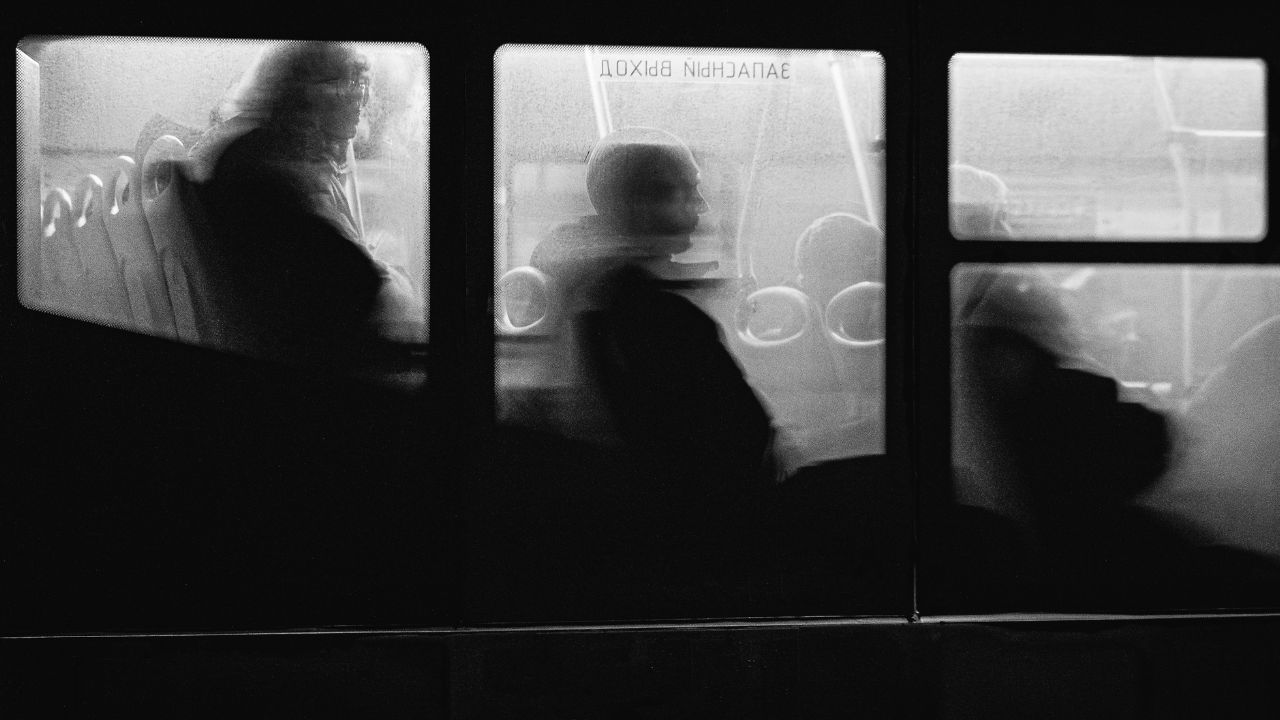
On my way home, I watched as damp people boarded the bus. Their faces glowed with the reflected light of smartphones, just like mine. I responded to the flurry of messages, passionately discussing the problems facing Russia. I felt like I was part of something bigger than myself. With each message and like, I realized how significant this was. I shared their frustration, wondered why such an important event had flown under the radar, and felt relieved that my fellow Russians weren't apathetic—they actually gave a damn about what was happening in the world. I invited them to my own lecture in March, just ten days out. A different topic, but I was sure we'd find something to connect over.
Then I received a message that surprised and irritated me: "You can't keep events like this to yourself—they belong to everyone." What exactly was I being accused of? I tried explaining that I'd only stumbled into the talk by a stroke of luck—or so it seemed then. It had taken serious determination and two bus transfers just to make it on time. I didn't mention standing the whole way, or getting drenched in February rain on the walk home. I'd gone to see the journalist because I was desperate for a taste of that elusive Russian spirit, which was already fading from memory. And now that Russian spirit was coming back to haunt me.
The next day, I found myself tangled in an online web of accusations. I had been bombarded by messages dripping with intellectual superiority and sharp-edged toxicity. The flood of criticism kept coming. I started trying on each label they threw at me. Sure, only an asshole would fail to announce such an event. Why hadn't I? Was this just another big-city habit I couldn't shake? Back then, I'd convinced myself that event invites were just more digital noise battering people already drowning in information. But that was a different life, long gone. I have to keep up. Messages kept rolling in, painting me as a snob and an egotist. "We want you to organize another talk!" other messages demanded. The royal “we” confused me, but I still thought maybe I could fix this.
I contacted the organizers of Elena’s talk and begged them to arrange another meeting with the local Russian-speaking community. I painted a picture of a packed hall full of engaged intellectuals, promised a warm welcome, offered all but honoraria. I kept quiet about my personal stake in this—my desperate need to shake off some hurtful labels. I could live with snob, but egotist hit too close to home. They got my messages. The follow-up meeting happened, and social media lit up with thumbs-ups, thank-yous for organizing it and securing the venue. I resisted the urge to fish for credit—that would be too egotistical. For a whole week, I felt like less of an asshole.
The day came, but the theater was practically empty. I counted six people and suggested waiting another ten minutes. Lectures don't typically pack the house, but you can expect a few dozen weathered emigrants and aspiring actors. A woman in a crimson sweater announced that no one else was coming. I let myself doubt her. I drove away thoughts that the local Slavic community doesn't care. I blamed traffic on 217. But she was determined to prove her point. Since the lecture was supposed to be immersive, I gave her the stage. She stepped into the spotlight and launched right in, no dramatic pause needed. “Aleksandr only claims to be part of the Slavic community when it's convenient," she said. “That's why people didn't show up."
I didn’t experience the Soviet era in full color. But in that moment, when I realized no one was coming to the lecture they had begged me to organize, I felt its authentic vibe. I couldn't believe what was happening. Suddenly I was back in first grade. I'd shoplifted a book, been caught. The next day, the classroom teacher called me up during first period. I remember my green apple hitting the floor and rolling away as I stumbled to the blackboard. I stood facing everyone. The teacher, younger than my sister, addressed the last Soviet first-graders: "This is a thief. He stole from the people. He's unworthy of being a Soviet student, so we won't accept him as a Young Pioneer. What do you have to say for yourself?"
I couldn't make out faces; I only heard her voice. I remember that green, green apple and thinking randomly: My father is dead. I said nothing, just waited for my chance to retrieve the apple. At home, I opened the stolen book. It was in German, which I couldn't read, but it was beautifully bound with vivid illustrations. I don't know why they let me keep it. I cracked the stiff spine, and out sprang a yellow brick road, wooden soldiers, and flying monkeys promising to show me their world's wonders. To them, I was just a traveler hungry for adventure.
Unlike my seven-year-old self, I can now see faces and distinguish voices. I recognize that everyone views me through their own lens, and that the labels they pin on me don’t dictate my identity. I remember that somewhere beyond the Urals, LGBTQIA+ operatives are living deep undercover. And I picture the illustrations in that stolen book—a yellow brick road beckoning to a lonely child, promising to lead him far away, closer to who he really is.
Comments
1 comments have been posted.
Aleksandr, I am blown away by your writing, insights, honesty. Thank you for your work. I'd love to know more about your project, Fairy Tales and Stereotypes. Best wishes!
Bija Gutoff | March 2026 |
Add a Comment