By the end of my freshman year of college, I’d begun to dread phone notifications. Each bubble contained its own worst case scenario. Whose first date went badly? Who was threatening to hurt themselves? Who needed to go to the ER? I never put my phone on Do Not Disturb. I had to be vigilant for the next late-night call.
Summer brought some relief: once we were sent back to our home states, I was no longer the first line of defense between my friends and the world, at least for a couple months. But then I began to tally the vicarious traumas and ran out of fingers.
I met an old friend for coffee and within an hour, pleasantries and updates dissolved into big heaving breaths that shook my entire body. She put a hand on my knee and leaned in. “You’re like an open wound,” she told me.
A couple years later, a therapist chastised me with an old adage: “You can’t light yourself on fire to keep everyone else warm.”
This younger version of me found lighting herself on fire so easy. What else was flesh for? Ablaze, no one could see the parts of me I’d rather hide.
Growing up, I used to examine my body and then pull an oversized T-shirt over my head to hide the shape of it. I didn’t even learn my actual size until I went shopping with my college roommate. She directed me away from poorly fitting jeans and toward the racks of cute dresses. She picked some out herself and dragged me into the dressing room.
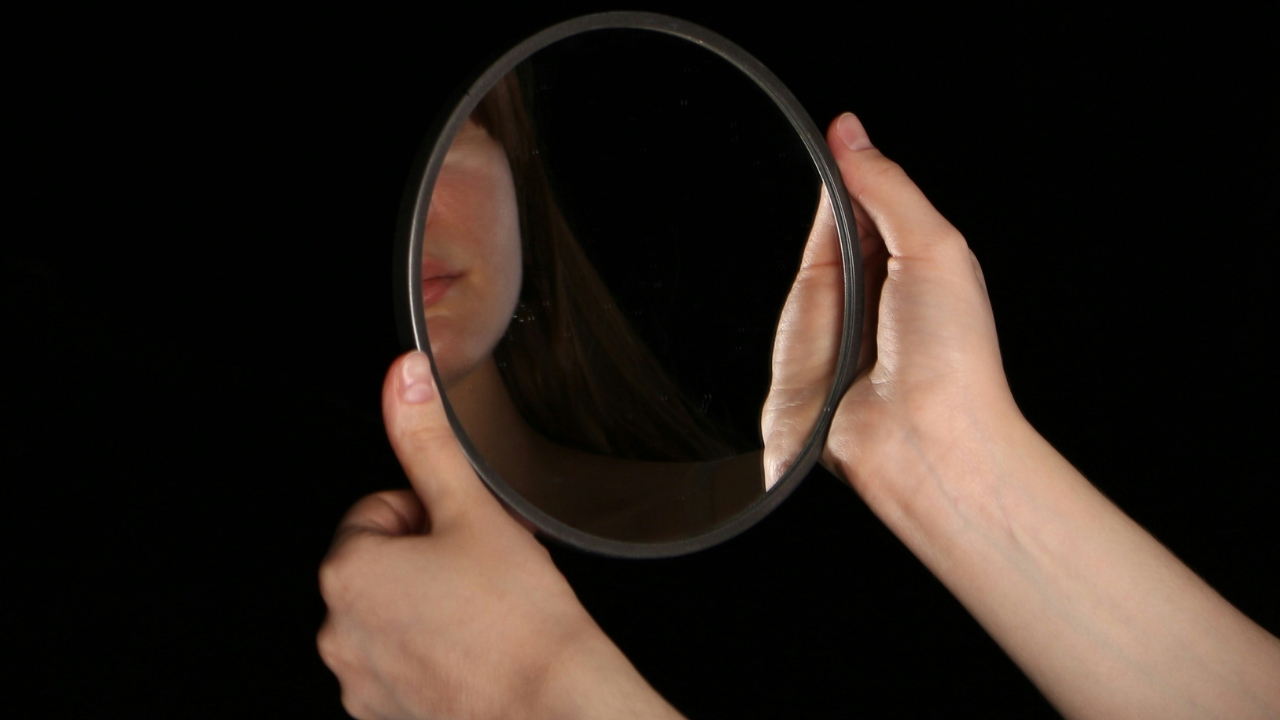
I started wearing those dresses, but I still ducked away from my own reflection. I didn’t care to hear all the critical thoughts that would run through my mind. I wanted to see the shape of my body reflected through someone else’s eyes.
The summer of the open wound I met someone whose gaze felt kinder.
We were both interns at the local newspaper. We swiveled our desk chairs toward each other often and laughed too loud in the back of the editor’s office.
He tried to transition the friendship out of the office first, inviting me to a movie I did not want to see. Wary of his intentions and unsure of what I really wanted from him, I turned him down.
I wasn’t ready to accept a date yet, but I felt connected by our shared intensity. We were two teenagers already burnt out, chewed up, and spit out by the world. I sent him a message, the first non-work related text. Let me know when a better movie comes out.
He tried again a few weeks later. His second proposal was more intentional—a benefit concert for a local immigrant rights organization. He knew I’ve been to a couple pro-refugee rallies. How could I reject that?
“I’ll get our tickets,” he told me. “Want to get dinner before?”
The invite had the shape of a date, but the implication simply hung in the air between us. I knew I wanted to be friends, and I knew I was craving something else, too. I didn't know what he was thinking, but I’d noticed the way he watched me, how we turned our bodies toward each other when we spoke.
When we got to the concert, I sensed an impending comedy of errors. I knew it was being hosted in the basement of a church, but I didn’t realize that only the congregation would be in attendance. This was not the scene for two teenagers without a chaperone, but there we were.
We sat in the last row of folding chairs, in the two seats closest to the exit. The local singers, earnest but terrible, strummed their poorly tuned guitars and crooned their off-key melodies. We fought back giggles. He whispered a snarky comment, and I leaned closer to hear him. I felt his soft breath against my ear. We were physically closer than we’d been since we met. I found it strange, but not unpleasant.
The next performer, a young child, stood up with a recorder. The boy from the newsroom and I made eye contact.
“Should we leave?” he asked.
“Please,” I said.
We wandered out into downtown as the sun dipped below the horizon. The chill of dusk felt refreshing after the stale basement.
Both of us wanted to talk more. We settled into a bench at the bus station.
As we talked, I released my grasp on my protective outer layer. Each sentence became more earnest as the next tumbled out into the air between us. He looked at me intently as I spoke, watching my face even when I broke eye contact. I told him about all of the horrible things I’d witnessed happen to my friends in the past year. “I feel like our bodies are treated like public property,” I said. “Owned by everyone except ourselves.”
When I paused, he said, “I had a feeling you’ve been sad.” Desperate to be understood, I believed him.
After we went back to our family homes for the night, we continued to text. We told each other secrets at 1:00 a.m., little blue bubbles lighting up our screens. On Monday, when I walked into the newsroom, he swiveled around from his desk and smiled big, and I felt a little flutter. Maybe, I thought, I don’t want to be just friends.
I’ve been anxious my entire life, so I was already used to the pit in my stomach, the knotted sensation that made it hard to eat. I wasn’t used to this new variation—this nausea that was almost pleasant, a constant jitteriness that felt like both fear and excitement. I chased the novelty of it even once my flight back to school touched down one thousand miles south.
A couple weeks later, he made the first unambiguous move. Over text, he told me he was thinking about what it would feel like to kiss me.
I slammed my phone onto my bed. I stood up straight and felt like I might throw up. Is this how I’m supposed to feel? I wondered. Are these the butterflies romcoms are always going on about? I went to the bathroom and looked at my face in the mirror. My skin was clear, my curly hair framed my face. My thin lips hid the gap between my front teeth. Is this the face he’s talking about? I asked myself. Is this the mouth he’s thinking about? I tried to see my reflection through his eyes. The nausea persisted.
On a video call with the boy from the newsroom shortly after my nineteenth birthday, the conversation turned to our previous romantic experiences. I tried to dodge the details. I felt so old to have so little to say. He put the pieces together partway through the conversation.
“So, you’ve never kissed anyone before?” he asked me.
I hesitated, shrinking away from the question, and he smiled, understanding the answer.
I felt the tension between us, and I knew I needed to talk to him about it before I visited home again in a couple of weeks. I practiced what I was going to say with my roommate: “I’m not ready to have sex yet. I’m excited to kiss you though.”
When I called him that night, I left my dorm room, seeking privacy for a conversation that made me feel exposed. I went to the soccer fields and walked up into the parking tower, all the way to the top floor. When I sat on the ledge, I could see the entire campus. I held my phone to my ear and told him I wanted to talk about boundaries. I delivered the speech I had practiced for a week.
“Why don’t you see how you feel when you get here?” he said.
Something heavy shifted in my stomach. I will later think of it as swallowed intuition.
When I hung up the phone, I reassured myself that he understood. I focused on counting down the days until my trip home, trying to redirect my mind to the excitement I felt before.
All too quickly, I was sitting on the edge of his bed. It was queen-sized with blue flannel sheets. I’d never been in his room before, so I tried to take in the details. His acoustic guitar, the one he was learning to play, was propped up in the corner. A stack of books about communist theory on the bookshelf. I ran my hand along the sheets, trying to root down into the moment.
He sat next to me and we looked at each other. His eyes were searching, looking for a way in. I blinked. I didn’t know how to make a move, never mind the first one.
He leaned in to kiss me, and I turned my face away, toward my lap, suddenly overcome with self-consciousness. What did I see in the mirror before? How will I move my mouth? What even is kissing? I’m humiliated to be having this string of thoughts at nineteen years old, the oldest anyone has ever been for their first kiss. I felt as though my insecurities were branded onto my forehead, across my clavicle, down my legs.
I looked back at him and held my face still. He leaned in again. Something about the kiss wasn’t clicking for me, but I wasn’t sure what it was. Nevertheless, I find my enthusiasm for it, leaning into him, holding his face. I wanted to stay there.
But his hands wandered under my shirt. They fidgeted with my bra clasp. I batted his hands away from the places I didn't want them to be. I was overwhelmed by the moment, by the fact of having a vulnerable teenage body.
He started to stick his tongue in my mouth, and it felt wrong. I said it out loud: “I don’t think I like that.”
“You just don’t know how to do it yet,” he said. He continued doing it.
The intensity kept increasing, and I kept hitting pause right before any real escalation.
His hands began to wander again, and I pushed them more forcefully down onto the bed, away from my body.
“I think you’re letting your mind get in the way of what your heart and your body want,” he told me.
My breath caught, like I’d been punched in the stomach.
Why is my mind not enough? I asked myself. What is between my thighs that he can’t find between my teeth?
I kept asking myself those questions on my flight back to school the next day.
In my rideshare on the way back to campus, the car radio blared out the reporting from Brett Kavanaugh’s Supreme Court hearing. I listened as decades-old teenaged bodies were resurrected to see if the harm committed was enough to prevent a man from holding court over the nation. It wasn’t.
I struggled to orient myself, swept up by a societal tidal wave, submerged in social media testimonies, news exposés, and stories told on the floor of my college dorm room. I felt both connected to and alienated from these conversations. My experience didn’t fit neatly into the binary of the narrative: that physical relationships are either fully good (consensual) or fully bad (assault).
I don’t really believe that the word assault ever accurately described my experience. Looking back, I can see how young we were, how we fumbled toward care, connection, and intimacy, in different ways and for different reasons. Now, I can see how a full spectrum of gray area exists between consent and assault.
I wasn’t violated in a way that could be tried in a court of law, but the way my words dissolved immediately after they exited my mouth, evaporated by his desires, felt like its own violation. I still can’t French kiss someone without thinking about what it felt like to have a foreign tongue in my mouth when I didn’t want it to be.
As I’ve grown older, I’ve struggled to understand why I chose to stay in a gray area, ignoring all my body signals telling me to make different choices. When did I lose the ability to sense when someone is intent on swallowing me whole? I think I believed that living in the gray area was unavoidable—that I shouldn’t expect more.
Once I broke off that relationship, I realized I didn’t want to compromise myself for someone else ever again. So I looked inward, examining all the broken pieces of myself to better understand who I was and what I wanted.
I saw something simultaneously new and old in the rubble—a latent queerness. I realized that my feeling of dissonance had so much to do with my denial of that queerness. Finally attuning myself to a long-buried intuition allowed me to imagine a future where I could show up as my whole self to be seen, understood, and accepted.
When I met the person who would become my spouse several years later, so much about the way I viewed myself changed. The gentleness with which she handled my heart, my body, and my mind showed me how I can honor all these parts of myself in my relationships. Love is not something that is enacted upon my body—love is something we create together.
Comments
No comments yet.
Add a Comment